Opening ceremony of exhibition of Japanese and English haiku by Art Communication Ltd of Tokyo.
BHS will have a stall (information, bookstall, film and website shows) at the arts and crafts festival organised by Bunkasai.
Leaves to a Tree Haiku Group, Leatherhead, meet every third Sat in January, April, July and October.
The results from the Haiku Section of the British Haibun Awards 2010, with comments from the judges and notes from the administrator.
The results from the Haiku Section of the British Haiku Awards 2010, with comments from the judges and notes from the administrator.
Haiku originated in Japan, but latterly it has become popular in an increasing number of languages and countries. Yet virtually everywhere where haiku has established itself - and that includes Japan itself - you will find people hallmark it differently. Some see haiku mainly as a kind of poetry, a literary phenomenon. For others, it is a source of philosophical inspiration and in some way helpful to their chosen life style, possibly inspired by Zen. For others still, it is the specific genius of Japanese art that attracts. Readers/writers of haiku often share something of all three viewpoints.
The British Haiku Society celebrated its 20th anniversary with an event at Daiwa House.
Results and judges comments from the final BHS / James W Hackett Annual International Award for Haiku.
Past Winners of the James W. Hackett Award 2002 – 2009
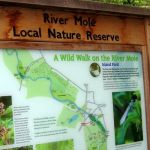
We gathered at one o’clock at Park House in Leatherhead for this 'expedition for beginners', organised by Diana Webb. There were fifteen BHS members, one ex-BHS member and sixteen other interested people, in groups designed to have an equal mix. Diana provided a very useful set of notes for everyone. This included quotations helpful in encouraging an openness to and awareness of special ‘moments’. There were also 24 haiku as examples for beginners and some extra notes on generally accepted features of what haiku should be.